Project highlights

Climate Neutral Buildings and Cities

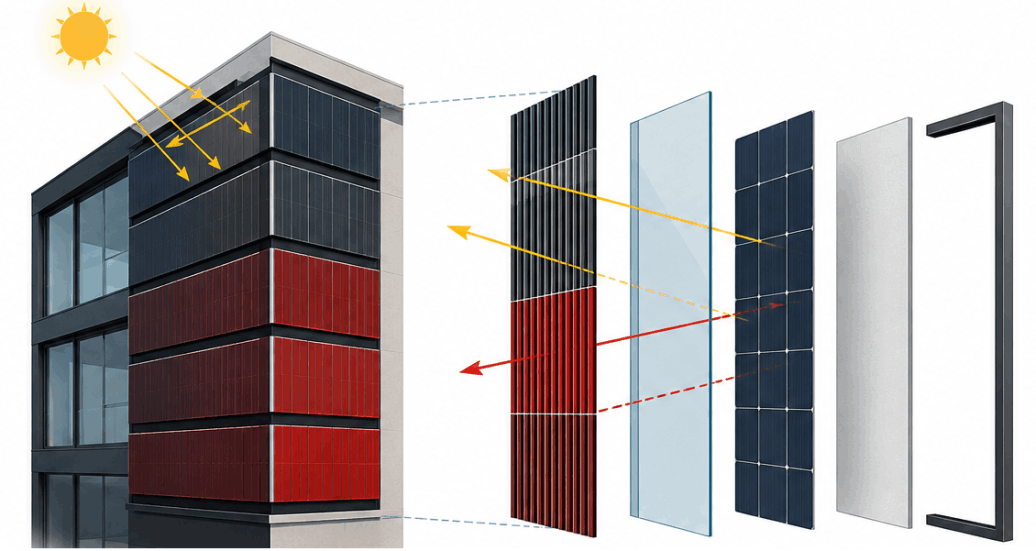
Schematic MiragePV - Konzepts

Schematic illustration (AI-generated)

MiragePV

(Building-Integrated Photovoltaic Facades with a Microstructured, Angle-Selective Design Layer)

The aim of the MiragePV project is to develop building-integrated photovoltaic (BIPV) facades that combine architectural design freedom with the highest possible electrical energy yield. The project focuses on a novel microstructured, angle-selective design layer integrated on or beneath the front glass of photovoltaic modules. This foil-based concept is compatible with various photovoltaic technologies, such as silicon and CIGS modules, and enables both integration into newly manufactured photovoltaic modules and retrofitting of existing modules.

At the CAE, the optical properties of the microstructured design layers are investigated experimentally and through optical simulations. The influence of different structures, materials, as well as viewing and illumination angles on the visual appearance, light transmission, and energy yield of the photovoltaic modules is analyzed. Together with the project partners, suitable design foils are developed, integrated into photovoltaic modules, and evaluated using demonstrator systems with respect to their performance and practical applicability.

Project partners: AxSun Solar GmbH & Co. KG, ACSYS Lasertechnik GmbH, Folienwerk Wolfen GmbH

Funding body: BMWE, funding code: 03EN1123A
Duration from 01.03.2026 to 28.02.2029 
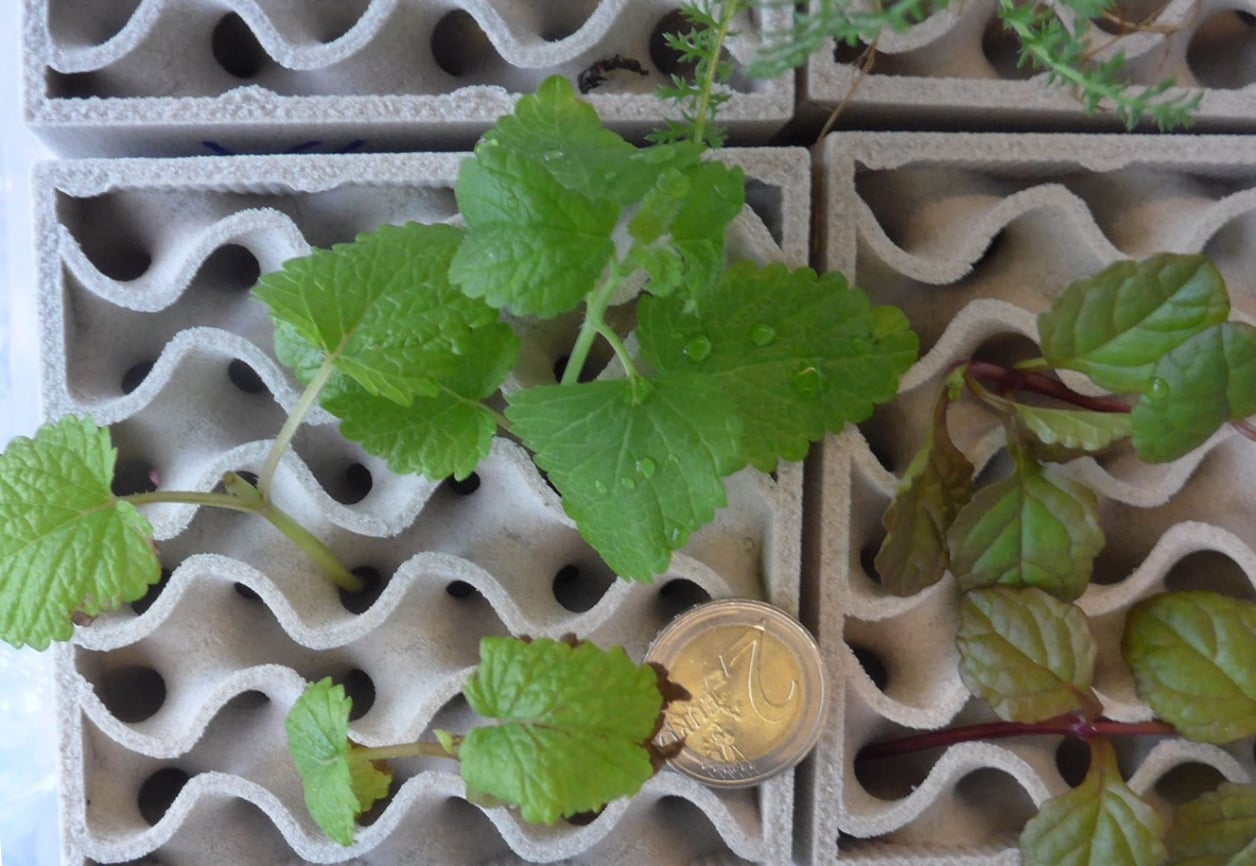
CAE symbiosis System made of mineral material with self-sustaining biological growth and thermally insulating

symbiosis
(System made of mineral material with self-sustaining biological growth and thermally insulating)

Development of a new type of façade greening with an optimized insulating effect, which is self-sufficient via a capillary water reservoir. The entire system is laser-sintered from a perlite and printed in corresponding functional layers using a 3D printer. This takes place in a pilot plant at the project partner ING3D GmbH. Using a 2000 W laser in a unique and innovative 3D manufacturing process known as “Mineral Direct Laser Sintering” (MDLS), the additive manufacturing of extremely lightweight and non-combustible objects is being realized for the first time. The mineral raw material used in this process makes 3D printing more than 10 times faster than conventional 3D printing processes (e.g. plastic printing) and can therefore be used for industrial production.

The aim of this micro-project is to evaluate the potential of 3D-printed porous structures as a basis for façade greening. Gradient materials with variable porosity are to be printed and examined with regard to their material properties. Growth and rooting tests will demonstrate the suitability of the structures for the growth of selected plants. Conversely, different plant species will be tested for their suitability to grow on the printed structures.

Funding body: BMWE, funding code: 09ENM1001
Duration from 01.12.2024 to 30.09.2025 

CAE Project highlights Climate Neutral Buildings and Cities

KICk-StARtER-G 
(AI-based controller for comfort-based control of thermal systems and control loops to increase the energy and resource efficiency of buildings)

In the BMBF-funded research project an AI-based controller for comfort-based control of thermal systems and control loops to increase the energy and resource efficiency of buildings (acronym KICk-StARtER-G) is being developed.
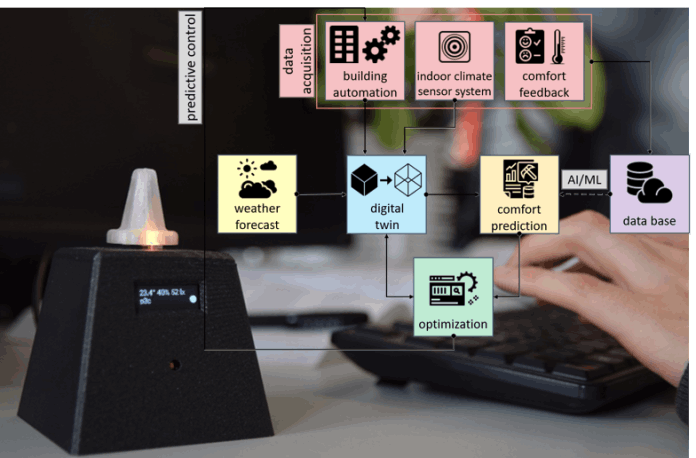
The project’s main innovation lies in the multidimensional optimization through the combination of hardware and software components with new intelligent and predictive methods for building control using machine learning (ML). Telemetry data from the Energy Efficiency Center (EEC, headquarter of the CAE), additional sensor data, a digital twin model of the building and weather forecasts are used to determine set-points for controlling heating and cooling, sun shading devices and artificial lighting and fed back into the EEC's existing building automation system. By correlating data and input commands with feedback from the building's users, the control and forecasting algorithms can be continuously improved to ensure that the building is highly energy efficient and comfortable at the same time.
By providing immediate energy saving potentials in building operation, the envisioned software-as-a-service & hardware solution can be transferred to other buildings, contributing to a sustainable energy transition.

Funding body: BMBF, funding code: 01|S23003A
Duration from 01.03.2023 to 28.02.2026

Offline Website Software